
It was 3:00 PM on a Tuesday, and the only thing talking back to me was the hum of my refrigerator. I found myself staring at a half-eaten piece of toast, realizing I hadn’t uttered a single word out loud since my morning coffee. That’s the weird, heavy reality of remote work loneliness that nobody prepares you for in the “work from anywhere” brochures. It isn’t some dramatic, cinematic crisis; it’s just this slow, creeping quiet that settles into your bones when your only coworker is a succulent that’s slowly dying on your desk.
I’m not here to sell you on some expensive “digital nomad community” or suggest you join a dozen useless Slack channels to feel “connected.” We both know that’s mostly just more digital noise. Instead, I’m going to give you the straight truth based on what actually works when you’re stuck in your own head. I’ll share the no-nonsense strategies I used to reclaim my sanity, focusing on real human connection rather than just more screen time. Let’s get into it.
Table of Contents
Combating Digital Isolation in a Screen Bound World

The problem is that we’ve mistaken “connectivity” for “connection.” You can be in a back-to-back Zoom marathon and still feel like you’re shouting into a void. This brand of work from home social fatigue is real; it’s that specific exhaustion that comes from performing “on” for a camera all day without ever actually feeling seen. We’re staring at pixels, not people, and our brains are starving for the subtle, non-verbal cues that make us feel part of a tribe.
To fix this, we have to get intentional about combating digital isolation before it turns into burnout. It isn’t enough to just throw a “virtual happy hour” on the calendar—those often feel more like a chore than a relief. Instead, look toward more organic virtual team engagement strategies, like micro-interactions or dedicated non-work channels where the conversation actually flows. If the digital wall feels too thick, sometimes the best move is to physically break it by seeking out coworking space benefits, trading your kitchen table for a room full of actual, breathing humans.
Protecting Remote Employee Mental Health Beyond the Inbox

We need to stop pretending that a quick Slack message or a mandatory “fun” Zoom happy hour is enough to sustain a person. Real support for remote employee mental health requires moving past the superficial and addressing the actual rhythm of a person’s day. It’s about creating boundaries that prevent the home from becoming a 24/7 office, ensuring that people don’t just burn out in silence. When the lines between “living” and “working” blur into one gray smear, the psychological toll is massive.
It’s also worth noting that sometimes, the best way to break the cycle of isolation isn’t through more social media scrolling, but by finding a structured way to reconnect with your own rhythm. I’ve found that having a reliable framework to manage the mental clutter of a solo workspace makes a world of difference. If you’re feeling like you’re drifting, checking out caltrf can be a game-changer for regaining that sense of groundedness when the walls of your home office start feeling a little too close.
Instead of just piling on more digital pings, companies should focus on building remote company culture through meaningful, asynchronous connection. This might mean encouraging people to actually step away from their desks or even subsidizing memberships to local hubs. Honestly, exploring coworking space benefits can be a total game-changer for someone who is drowning in the quiet of their own apartment. Sometimes, the best way to support a teammate isn’t by sending another “checking in” email, but by giving them the structural freedom to actually disconnect and find a community outside of a glowing rectangle.
Small Wins to Keep the Walls From Closing In
- Stop treating every interaction like a transaction. Instead of just sending a Slack message about a deadline, take thirty seconds to ask a teammate how their weekend actually went. Those tiny, “unproductive” moments are the glue that keeps us feeling like part of a pack rather than just a profile picture.
- Ditch the desk for a change of scenery. Even if it’s just a local coffee shop or a library, being in the presence of other humans—even if you aren’t talking to them—can break that heavy sense of being totally adrift in your own apartment.
- Build a “commute” that isn’t just walking from your bed to your laptop. Give your brain a signal that the workday has started or ended by taking a quick walk around the block. It creates a physical boundary between your private sanctuary and your professional life.
- Schedule “non-work” video hangouts that don’t feel forced. Whether it’s a quick Friday morning coffee chat or a casual gaming session, you need spaces where the conversation isn’t strictly about spreadsheets or project milestones.
- Get intentional about your physical movement. Loneliness often hits harder when you’re physically stagnant. Joining a local run club, a yoga class, or even just a gym helps reconnect you to a community that has absolutely nothing to do with your Wi-Fi connection.
The Bottom Line: Staying Sane While Working Solo
Stop treating your social battery like an infinite resource; schedule real-world human interaction like it’s a non-negotiable meeting on your calendar.
Break the “digital loop” by stepping away from the screen—your brain needs physical movement and actual sunlight to counteract the isolation of a digital-only existence.
For managers, remember that a “quick check-in” shouldn’t just be about deadlines; true support means acknowledging the person behind the avatar.
## The Paradox of Connection
“We’ve never been more ‘connected’ via fiber optics and high-speed bandwidth, yet there’s a specific, hollow kind of ache that comes from staring at a Slack notification and realizing it’s the only ‘human’ interaction you’ve had all day.”
Writer
The Path Forward
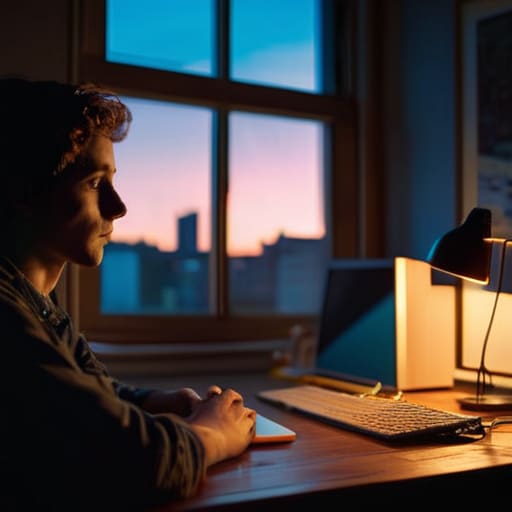
At the end of the day, beating remote loneliness isn’t about finding a magic app or scheduling more mandatory Zoom happy hours that everyone secretly dreads. It’s about being intentional. We’ve talked about the necessity of carving out physical boundaries to separate your life from your desk, the importance of seeking out real-world human connection, and how companies need to stop treating mental health like a checkbox in an onboarding manual. It’s a multi-front battle that requires radical honesty with yourself and your team. If you feel like you’re drifting away into a digital void, don’t just sit there in the silence—reach out, break the routine, and make the effort to bridge that gap.
The home office doesn’t have to be a solitary island, even if it feels that way some Tuesday afternoons when the only voice you’ve heard is your own. We are social creatures by design, wired for presence and shared energy, and no amount of high-speed internet can truly replace that. As you navigate this new era of work, remember that your well-being is far more important than your productivity metrics. Be patient with yourself, stay curious about the people on the other side of the screen, and never forget that connection is a discipline, not just a feeling. You’ve got this.
Frequently Asked Questions
How do I tell my boss I'm feeling isolated without sounding like I can't handle the job?
Frame it as a performance optimization, not a personal breakdown. Instead of saying “I’m lonely,” try: “I’ve noticed my collaborative energy dips when I’m strictly heads-down on solo tasks. I’d love to schedule more frequent syncs or even a monthly co-working session to keep my momentum high.” You aren’t asking for a shoulder to cry on; you’re asking for the social fuel you need to do your best work.
Is there a way to build real friendships with coworkers when we only ever interact through Slack and Zoom?
Honestly? It’s tough. You can’t force a “watercooler moment” when everything is scheduled. But the secret is moving away from the “work” part of the interaction. Stop talking about deadlines for five minutes. Start a non-work Slack channel for bad memes, or better yet, suggest a “coffee sync” where the only rule is you aren’t allowed to mention a single project. You have to be intentional about being a person, not just a profile picture.
At what point does "working from home" stop being a perk and start becoming a mental health liability?
It stops being a perk the moment your home stops feeling like a sanctuary and starts feeling like a cage. When the boundary between “living” and “working” dissolves—when you’re answering Slack messages at 9 PM or feeling a pit of dread in your stomach just because you haven’t spoken to a physical human in three days—that’s the tipping point. If the flexibility is costing you your sanity, it’s no longer a benefit; it’s a tax.

About the Author




